
Designing the Profile of the Future Architect
Designing the Profile of the Future Architect Ervin Taçi for SHARE Architects As technology transforms the way we design, cities grow increasingly complex, and architecture gains access to unprecedented tools for creating new forms, architect Ervin Taçi returns to something fundamentally simple.
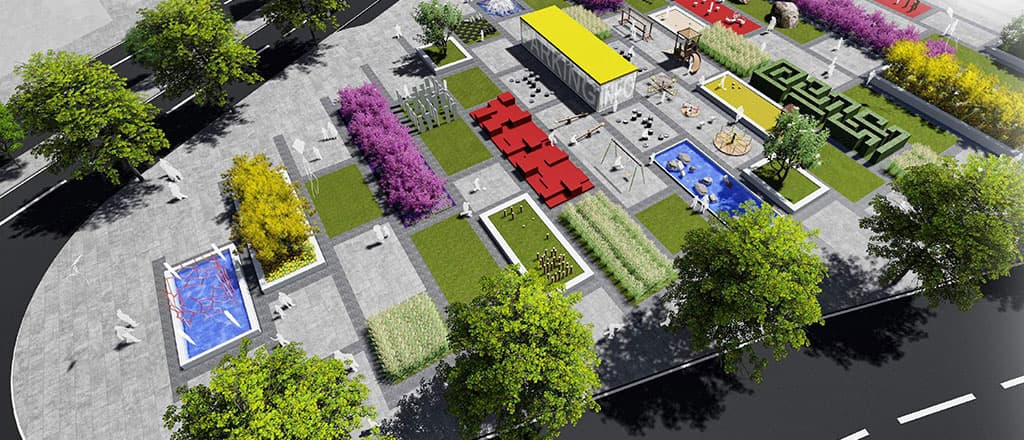
Designing the Profile of the Future Architect Ervin Taçi for SHARE Architects What kind of architect does the future need? As technology transforms the way we design, cities grow increasingly complex, and architecture gains access to unprecedented tools for creating new forms, architect Ervin Taçi returns to something fundamentally simple: the human scale. His contribution, “Designing the Profile of the Future Architect,” was included in the international editorial project and book developed by SHARE Architects — a collection bringing together thoughts, architectural manifestoes and interviews from 100 architects from around the world. Rather than attempting to predict what the buildings of tomorrow will look like, Taçi addresses a more fundamental question: Who should the architect of tomorrow become? His answer begins not with technology, form or spectacle, but with people. The Future Begins with the Human Scale The challenges facing architects have changed dramatically over the last century. Following the Second World War, economic expansion and industrialisation accelerated the growth of cities around the world. New housing models, infrastructure and large-scale urban development responded to an urgent need for expansion. But something essential was often lost in the process. The human dimension of the city. Large buildings were separated by disproportionately large open spaces. Urban planning increasingly prioritised systems, vehicles and efficiency, while the pedestrian experience and the social role of public space were frequently pushed into the background. For Taçi, understanding this history is essential when discussing the future of architecture. Because the architect of tomorrow must also respond to the consequences of yesterday's planning decisions. The challenge is no longer simply to expand cities. It is to make them liveable. Creating Cities for People After decades in which the human dimension was often neglected, cities around the world are rediscovering the importance of pedestrian life and public space. Walking, meeting, sitting, observing, playing and interacting may appear to be ordinary activities. Yet collectively, they create urban life. A successful city must therefore do more than accommodate buildings and infrastructure. It must create the conditions for people to encounter one another. This means shorter walking distances. Attractive public spaces. A diversity of urban functions. Safer pedestrian environments. And neighbourhoods where everyday activities can coexist. Urban planning becomes directly connected to social sustainability. When people are invited to walk, remain in public space and interact with one another, architecture and urban design begin to strengthen the social fabric of the city. The architect's responsibility therefore extends far beyond the limits of an individual building. Architecture Is Not Only About Form One of the strongest ideas in Ervin Taçi's contribution is his critique of architecture understood primarily as an exercise in form. Contemporary architectural culture has often celebrated buildings for their ability to attract attention. Iconic silhouettes. Unexpected geometries. Spectacular façades. Architecture designed to become an image. The global media environment has reinforced this tendency, creating a culture in which buildings can sometimes be evaluated according to their visual impact before their contribution to everyday urban life is considered. But architecture cannot exist independently from the city surrounding it. A building is part of an urban organism. Regardless of whether it is spectacular or restrained, monumental or modest, every building influences its context. It changes movement. It creates boundaries. It produces shadows. It defines public and private space. It influences how people experience the street. Architecture must therefore be understood not simply as form, but as an interaction between form and life. From Object to Relationship This distinction fundamentally changes the role of the architect. Instead of asking only: What should this building look like? The architect begins asking: How will people approach it? How does it meet the street? What happens around it? What kind of public space does it create? How does it contribute to the neighbourhood? What relationships can emerge between the building and the people who use it? These questions shift architecture away from the isolated object and toward a network of relationships. Architecture + People Building + Public Space Form + Life City + Human Scale The quality of architecture begins to depend not only on the object itself, but on what happens around and within it. Tirana Olympic Park: Architecture and Urban Life Within his contribution, Taçi refers to Tirana Olympic Park, developed by DEA Studio, as a representative example of the studio's approach to architecture and urban design. The project demonstrates an interest in architecture that extends beyond the individual building toward the relationship between movement, public space, landscape and human activity. Rather than seeing architecture as an autonomous object, the project considers how different elements can work together as part of a larger urban experience. The architecture becomes activated by people. Movement becomes part of the composition. Public space becomes part of the project. The relationship between buildings becomes as important as the buildings themselves. This way of thinking represents a recurring principle in Taçi's approach: architecture should participate in city life rather than simply occupy the city. Borea Ski Resort: Architecture at the Scale of Territory The contribution also references Borea Ski Resort, a complex project integrating urban design and architecture. Here, the architectural question expands to an even larger scale. The architect must consider not simply an individual object but an entire system: buildings, movement, landscape, infrastructure, public space and human experience. Projects of this complexity reveal why the architect of the future cannot operate within the boundaries of a single discipline. Architecture increasingly requires the ability to think across scales. From detail to building. From building to public space. From public space to masterplan. From masterplan to landscape. The architect becomes a coordinator of relationships. Technology Will Change. The Human Scale Must Remain. The future architect will inevitably work with technologies radically different from those available to previous generations. Digital design has already transformed architectural practice. Parametric tools, computational design, advanced simulation, new materials, fabrication technologies and increasingly artificial intelligence are changing how architects analyse, visualise and produce architecture. These technologies create extraordinary possibilities. But they also introduce an important question: What remains constant when the tools continuously change? For Ervin Taçi, the answer is clear. The human being. Technology can optimise. It can calculate. It can generate. It can simulate. But the architect must continue asking what all of these capabilities ultimately serve. Innovation should expand architecture's possibilities without allowing architecture to lose sight of its purpose. Remember for Whom We Design This becomes the central message of Ervin Taçi's contribution to Designing the Profile of the Future Architect. As the profession adapts to continuous technological development and innovation, the architect must not lose the human scale as the focal point of design. And ultimately, the architect must remember: for whom are we designing? It is a deceptively simple question. Yet it can transform an entire project. Because architecture is ultimately experienced by people. Not from the masterplan. Not from the rendering. Not from the architectural photograph. But from the ground. At eye level. While walking through a street. Entering a building. Sitting beneath a tree. Crossing a public square. Living inside a home. The future of architecture may therefore depend not only on how advanced our tools become, but on how successfully we continue to understand the people those tools are meant to serve. Part of a Global Architectural Conversation Ervin Taçi's text forms part of “Designing the Profile of the Future Architect,” the first editorial project developed by the SHARE Society. The publication brings together contributions from 100 architects from around the world, collected through SHARE International Architecture Forums across Central and Eastern Europe. Thoughts, manifestoes and interviews were brought together around a shared question: how should the architectural profession evolve in response to the profound transformations affecting cities, society, technology and the environment? The diversity of perspectives is precisely what gives the project its relevance. There may be no single profile of the future architect. But there are fundamental responsibilities that the profession cannot afford to forget. The Architect of Tomorrow The architect of the future will need to adapt. To understand new technologies. To work across disciplines. To respond to environmental challenges. To operate across different scales and increasingly complex urban systems. But progress should not be measured only by the sophistication of our buildings or the technologies used to create them. It should also be measured by the quality of the environments we create for people. Cities that invite us to walk. Public spaces that encourage us to meet. Architecture that contributes to its surroundings. Buildings that participate in life rather than simply becoming objects to be observed. The tools will evolve. The city will evolve. The profession will evolve. But one question should remain at the centre of architectural thinking: For whom are we designing? For Ervin Taçi, the answer defines the profile of the future architect: Adapt to innovation. Embrace technology. Understand the city. But never forget the human scale.